Kyoto, the former imperial capital of Japan, stands as a living museum of Japanese culture, tradition, and spirituality. With over 1,600 Buddhist temples, 400 Shinto shrines, and countless traditional gardens, this UNESCO World Heritage city offers visitors an unparalleled glimpse into Japan's rich cultural heritage. As you plan your 2025 journey to Kyoto, prepare to immerse yourself in a world where ancient traditions seamlessly blend with modern comforts.
Why Visit Kyoto in 2025?
Kyoto continues to evolve while preserving its authentic character. The city has implemented new sustainable tourism initiatives, making it more accessible than ever for international visitors. New boutique hotels are opening in restored machiya (traditional townhouses), while traditional ryokans maintain their centuries-old hospitality standards. The Japanese government's tourism recovery efforts have enhanced visitor experiences while protecting cultural heritage sites.
2025 brings special significance as Japan celebrates several cultural milestones, including the 150th anniversary of the Meiji Restoration and various traditional festivals that showcase Kyoto's unique heritage. New direct flight connections and improved rail links from major Asian cities make Kyoto more accessible than ever before.
Best Time to Visit Kyoto
Kyoto experiences four distinct seasons, each offering unique experiences. Spring (March to May) is arguably the most magical time to visit, as cherry blossoms transform the city into a pink wonderland. The peak cherry blossom season typically occurs in late March to early April, though exact timing varies each year. This period also brings pleasant temperatures ranging from 10-20°C (50-68°F), perfect for exploring the city on foot.
Summer (June to August) brings hot and humid weather, with temperatures often exceeding 30°C (86°F) and frequent rainfall. However, this season offers unique experiences like the Gion Matsuri festival in July and the opportunity to see traditional summer gardens in full bloom. The famous "green tunnel" of Arashiyama Bamboo Grove is particularly lush during this time.
Autumn (September to November) is another spectacular season, with the city's maple trees turning brilliant shades of red, orange, and gold. The autumn foliage typically peaks in late November, creating breathtaking landscapes at temples like Tofuku-ji and Kiyomizu-dera. Temperatures during autumn range from 15-25°C (59-77°F), providing comfortable conditions for sightseeing.
Winter (December to February) brings cooler temperatures of 0-10°C (32-50°F) and occasional snowfall, creating magical winter scenes at temples and shrines. This is the least crowded season, offering visitors the opportunity to experience Kyoto's cultural sites in relative peace. Winter also brings unique experiences like snow-covered temple roofs and traditional winter cuisine.
Getting to Kyoto
Kyoto is easily accessible from major international airports. Kansai International Airport (KIX) in Osaka is the closest major airport, located about 75 minutes from Kyoto by train. Several airlines offer direct flights to KIX from major cities in Asia, Europe, and North America. From the airport, you can take the JR Haruka Express train directly to Kyoto Station, or use the Airport Limousine Bus service.
For travelers arriving in Tokyo, the Shinkansen (bullet train) offers the fastest and most comfortable journey to Kyoto. The journey takes approximately 2.5 hours and provides stunning views of Mount Fuji and the Japanese countryside. Japan Rail Pass holders can use this service at no additional cost.
Once you arrive in Kyoto, the city's efficient public transportation system makes it easy to reach your accommodation. Kyoto Station serves as the main transportation hub, with connections to the city's bus and subway networks. Many hotels offer shuttle services from the station, while taxis are readily available for those with heavy luggage.
Where to Stay in Kyoto
Kyoto offers accommodation options for every budget and preference, from traditional ryokans to modern international hotels. The city is divided into several distinct areas, each offering unique experiences and convenient access to different attractions.
Gion and Higashiyama districts are ideal for first-time visitors who want to experience traditional Kyoto. These areas are home to many historic temples and shrines, traditional tea houses, and preserved machiya buildings. Staying here provides an authentic atmosphere and easy access to major cultural sites like Kiyomizu-dera Temple and Yasaka Shrine. However, these areas can be expensive and may have limited dining options in the evenings.
Central Kyoto, around Kyoto Station and Karasuma-dori, offers modern conveniences and excellent transportation links. This area is home to many international hotel chains, shopping centers, and restaurants. While it lacks the traditional atmosphere of other districts, it provides easy access to all parts of the city and is particularly convenient for day trips to nearby destinations.
Arashiyama, located in western Kyoto, offers a more relaxed, nature-focused experience. This area is famous for its bamboo grove, monkey park, and scenic river views. Accommodation here tends to be more expensive but provides a peaceful retreat from the city center. The area is particularly beautiful during cherry blossom and autumn foliage seasons.
For the ultimate traditional experience, consider staying at a ryokan (traditional Japanese inn). These establishments offer tatami-matted rooms, traditional kaiseki meals, and often include access to private onsen (hot spring baths). While expensive, they provide an authentic Japanese hospitality experience that's becoming increasingly rare in modern Japan.
Getting Around Kyoto
Kyoto's compact city center is best explored on foot, allowing visitors to discover hidden temples, traditional shops, and charming neighborhoods that might be missed when using public transportation. The city's grid-like layout in the center makes navigation relatively straightforward, though the narrow, winding streets of traditional districts can be disorienting for first-time visitors.
Kyoto's bus network is extensive and convenient for reaching attractions outside the city center. The city offers several bus passes designed for tourists, including the Kyoto City Bus One-Day Pass and the Kyoto Sightseeing Card. These passes provide unlimited rides on city buses and often include discounts at major attractions. Bus stops are clearly marked in English, and route maps are available at tourist information centers.
The city's subway system consists of two lines: the Karasuma Line running north-south and the Tozai Line running east-west. While limited in coverage, the subway is fast and efficient for traveling between major areas. Kyoto Station serves as the main hub for both subway lines and provides connections to regional and national rail services.
For exploring areas outside the city center, consider renting a bicycle. Kyoto is relatively flat and has dedicated cycling paths along many major roads. Many hotels and guesthouses offer bicycle rentals, and several dedicated rental shops are located throughout the city. Cycling allows you to cover more ground than walking while still experiencing the city at a leisurely pace.
Essential Sights and Experiences
Kiyomizu-dera Temple
Perched on the slopes of Mount Otowa, Kiyomizu-dera Temple offers some of the most spectacular views in Kyoto. The temple's main hall, built without using a single nail, extends over a cliff and provides panoramic views of the city below. The temple is particularly famous for its wooden stage, which offers visitors the opportunity to experience the same views that inspired countless artists and poets throughout history.
Don't miss the temple's famous water feature, where visitors can drink from three streams using long-handled cups. Each stream is said to grant different benefits: longevity, success in studies, and love. The temple complex also includes several smaller shrines and pagodas, as well as beautiful gardens that change dramatically with the seasons.
Visit early in the morning to avoid crowds and experience the temple in relative peace. The temple is also spectacular during the evening illumination events held during cherry blossom and autumn foliage seasons. These events require advance reservations and offer a completely different perspective on the temple's beauty.
Fushimi Inari Shrine
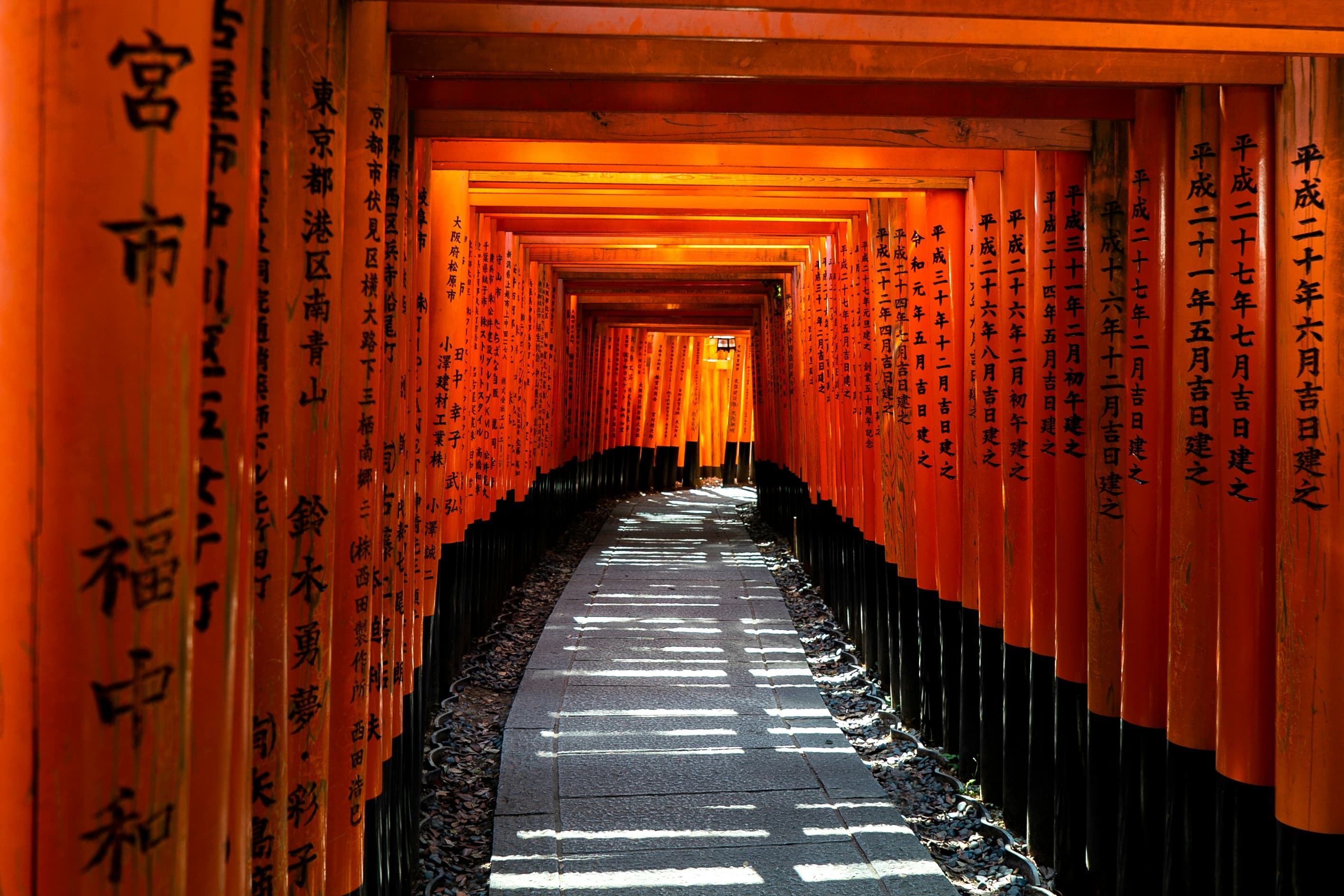
Fushimi Inari Shrine is one of Kyoto's most iconic and photographed locations, famous for its thousands of vermilion torii gates that form a tunnel leading up the sacred Mount Inari. The shrine is dedicated to Inari, the Shinto god of rice and sake, and has been a place of pilgrimage for over 1,300 years. The main shrine complex at the base of the mountain is impressive in its own right, with its distinctive red buildings and traditional architecture.
The famous torii gate path, known as the Senbon Torii, begins just behind the main shrine buildings. The path winds its way up the mountain for about 4 kilometers, with smaller shrines and rest areas scattered along the route. While the entire path can take 2-3 hours to complete, even walking through the first section provides the iconic photo opportunities that make this shrine famous.
For the best experience, visit early in the morning or late in the afternoon to avoid the largest crowds. The shrine is open 24 hours, making it possible to experience the magical atmosphere of the torii gates at dawn or dusk. During peak seasons, consider visiting on weekdays when crowds are typically smaller.
Arashiyama Bamboo Grove
The Arashiyama Bamboo Grove is one of Kyoto's most photographed locations, with its towering bamboo stalks creating a natural tunnel that filters sunlight in magical ways. The grove is located in western Kyoto and is easily accessible by bus or train from the city center. While the bamboo grove itself is relatively small, the surrounding area offers numerous attractions that make it worth dedicating a full day to explore.
Beyond the bamboo grove, the Arashiyama area includes several important temples and shrines. Tenryu-ji Temple, a UNESCO World Heritage site, features beautiful gardens and traditional architecture. The temple's garden is considered one of the finest examples of Japanese landscape design and offers stunning views of the surrounding mountains.
The area is also famous for its seasonal beauty. During cherry blossom season, the nearby Arashiyama Park offers spectacular views of pink blossoms against the backdrop of the Hozu River. In autumn, the maple trees turn brilliant shades of red and orange, creating breathtaking landscapes that attract photographers from around the world.
Golden Pavilion (Kinkaku-ji)
Kinkaku-ji, officially known as Rokuon-ji, is one of Kyoto's most famous landmarks and a UNESCO World Heritage site. The temple's top two floors are completely covered in gold leaf, creating a stunning reflection in the surrounding pond. Originally built as a retirement villa for shogun Ashikaga Yoshimitsu in the 14th century, the pavilion was later converted to a Zen temple.
The pavilion is set within a beautiful garden that reflects the traditional Japanese concept of harmony between architecture and nature. The garden includes several small islands in the pond, each carefully positioned to create perfect reflections of the pavilion from various angles. The surrounding landscape changes dramatically with the seasons, offering different perspectives throughout the year.
While visitors cannot enter the pavilion itself, the viewing areas provide excellent photo opportunities. Visit early in the morning to avoid crowds and capture the best reflections in the pond. The temple is particularly beautiful during autumn when the surrounding maple trees add brilliant color to the scene.
Gion District
Gion is Kyoto's most famous geisha district and offers visitors a glimpse into traditional Japanese entertainment culture. The district's preserved machiya buildings, traditional tea houses, and narrow streets create an atmosphere that transports visitors back to the Edo period. While geisha performances are typically private and expensive, the district itself is worth exploring for its historical atmosphere and traditional architecture.
The area is particularly beautiful in the evening when the traditional lanterns are lit and the streets take on a magical atmosphere. Many of the buildings are private residences or exclusive establishments, so visitors should be respectful and avoid intrusive photography. The district is also home to several traditional restaurants and tea houses where visitors can experience authentic Japanese cuisine and hospitality.
Gion is located adjacent to Yasaka Shrine, one of Kyoto's most important Shinto shrines. The shrine is particularly famous for its role in the Gion Matsuri festival, one of Japan's most famous festivals held annually in July. Even outside of festival season, the shrine offers beautiful architecture and peaceful gardens worth exploring.
Food and Markets
Traditional Kyoto Cuisine
Kyoto is renowned for its sophisticated cuisine, which reflects the city's imperial heritage and emphasis on seasonal ingredients. Kaiseki, the traditional multi-course Japanese meal, originated in Kyoto and represents the pinnacle of Japanese culinary art. These elaborate meals typically include 8-12 courses, each carefully prepared to highlight seasonal ingredients and traditional cooking techniques.
Kyoto's location away from the sea has influenced its cuisine, with an emphasis on vegetables, tofu, and freshwater fish. The city is famous for its tofu dishes, particularly yudofu (hot pot tofu) and agedashi tofu (deep-fried tofu in dashi broth). Seasonal vegetables play a prominent role in Kyoto cuisine, with dishes changing throughout the year to reflect what's available.
For a more casual dining experience, try Kyoto's famous ramen shops, which often feature rich, pork-based broths and handmade noodles. The city is also known for its traditional sweets, particularly wagashi (traditional Japanese confections) that are often served with green tea. Many of these sweets are made using traditional methods and seasonal ingredients.
Nishiki Market
Nishiki Market, known as "Kyoto's Kitchen," is a narrow shopping street lined with over 100 shops and restaurants. The market has been serving Kyoto's residents for over 400 years and offers visitors the opportunity to sample local specialties and purchase traditional ingredients. The market is particularly famous for its fresh seafood, pickled vegetables, and traditional sweets.
Many of the market's vendors offer samples of their products, making it a great place to try new foods and discover local specialties. The market is also home to several small restaurants and food stalls where visitors can enjoy fresh, local cuisine at reasonable prices. Don't miss the opportunity to try Kyoto's famous pickled vegetables, which are often made using traditional methods passed down through generations.
The market is busiest in the morning when local residents do their daily shopping, but visiting in the afternoon allows you to take your time exploring the various shops and sampling different foods. Many vendors are happy to explain their products and cooking methods, providing insight into Kyoto's rich culinary traditions.
Traditional Tea Houses
Kyoto is the birthplace of the Japanese tea ceremony, and the city offers numerous opportunities to experience this traditional ritual. Traditional tea houses can be found throughout the city, particularly in areas like Gion and Arashiyama. Many offer both formal tea ceremonies and more casual tea tastings, allowing visitors to experience Japanese tea culture at their own comfort level.
The tea ceremony is more than just drinking tea; it's a spiritual practice that emphasizes harmony, respect, purity, and tranquility. Even casual visitors can appreciate the beauty of the traditional tea rooms, the careful preparation of the tea, and the peaceful atmosphere that surrounds the entire experience. Many tea houses also serve traditional Japanese sweets that complement the tea.
For those interested in learning more about tea culture, several tea houses offer introductory classes where visitors can learn about different types of Japanese tea, proper brewing methods, and the cultural significance of tea in Japanese society. These experiences provide valuable insight into one of Japan's most important cultural traditions.
Optional Day Trips
Nara
Nara, Japan's first permanent capital, is located just 45 minutes from Kyoto by train and offers visitors the opportunity to experience some of Japan's oldest and most important cultural sites. The city is famous for its free-roaming deer, which are considered sacred messengers of the Shinto gods. These gentle animals have become a symbol of Nara and can be found throughout Nara Park, particularly around the famous Todai-ji Temple.
Todai-ji Temple is home to Japan's largest bronze Buddha statue, the Daibutsu, which stands over 15 meters tall. The temple's main hall, the Daibutsuden, is the largest wooden building in the world and houses the massive Buddha along with several other important Buddhist statues. The temple complex also includes several smaller shrines and pagodas, as well as beautiful gardens.
Nara is also home to several other important temples and shrines, including Kasuga Taisha Shrine, famous for its hundreds of bronze and stone lanterns, and Horyu-ji Temple, one of Japan's oldest temples and a UNESCO World Heritage site. The city's compact size makes it easy to explore on foot, though the hilly terrain can be challenging for some visitors.
Osaka
Osaka, Japan's third-largest city, is located just 30 minutes from Kyoto by train and offers a completely different experience from the traditional atmosphere of Kyoto. Known as Japan's "kitchen," Osaka is famous for its street food culture and casual dining scene. The city's Dotonbori district is particularly famous for its neon lights, street food stalls, and vibrant nightlife.
Osaka Castle, one of Japan's most famous landmarks, offers visitors the opportunity to learn about the city's rich history and enjoy panoramic views of the surrounding area. The castle's museum provides insight into the life of Toyotomi Hideyoshi, one of Japan's most important historical figures, and the turbulent period of Japanese history in which he lived.
The city is also home to Universal Studios Japan, one of the most popular theme parks in Asia. The park features several attractions unique to Japan, including Super Nintendo World and various anime-themed areas. While the park can be crowded, it offers a fun break from traditional sightseeing and is particularly popular with families.
Mount Hiei
Mount Hiei, located just northeast of Kyoto, offers visitors the opportunity to experience Japan's natural beauty and spiritual heritage. The mountain is home to Enryaku-ji Temple, one of Japan's most important Buddhist temples and a UNESCO World Heritage site. The temple complex includes several buildings scattered across the mountain, connected by hiking trails that offer stunning views of Lake Biwa and the surrounding countryside.
The mountain is particularly beautiful during autumn when the maple trees turn brilliant shades of red and orange. The hiking trails range from easy walks suitable for families to more challenging routes for experienced hikers. Several viewpoints along the trails provide spectacular panoramic views of Kyoto and the surrounding area.
For those who prefer not to hike, a cable car provides easy access to the mountain's summit, where visitors can enjoy the views and explore the temple complex. The mountain is also home to several traditional inns where visitors can experience traditional Japanese hospitality and enjoy the peaceful mountain atmosphere.
Safety, Etiquette, and Money
Safety Considerations
Kyoto is one of Japan's safest cities, with extremely low crime rates and excellent public safety standards. The city's efficient emergency services and well-maintained infrastructure ensure that visitors can feel secure throughout their stay. However, it's always wise to take basic precautions, such as keeping valuables secure and being aware of your surroundings.
The city's public transportation system is safe and reliable, with well-lit stations and regular service throughout the day and evening. Taxis are also safe and regulated, though they can be expensive for longer journeys. Walking around the city, even at night, is generally safe, though some areas may be less well-lit than others.
Natural disasters, particularly earthquakes, are a consideration in Japan. While Kyoto is located in a relatively low-risk area, it's important to familiarize yourself with emergency procedures and evacuation routes. Most hotels provide information about emergency procedures, and the city has an efficient early warning system for natural disasters.
Cultural Etiquette
Japan places great emphasis on respect and proper behavior, and visitors should be aware of basic cultural etiquette. When visiting temples and shrines, dress modestly and remove your shoes when entering buildings where this is required. Photography is generally allowed in most areas, but be respectful of worshippers and avoid taking photos during religious ceremonies.
When dining in traditional restaurants, it's customary to say "itadakimasu" before eating and "gochisosama deshita" after finishing. Using chopsticks properly is appreciated, and it's considered rude to stick chopsticks upright in a bowl of rice. Many restaurants provide both chopsticks and Western utensils, so don't worry if you're not comfortable with chopsticks.
Public behavior should be respectful and quiet, particularly on public transportation where talking on phones and eating are generally discouraged. Queuing is taken seriously in Japan, and visitors should respect the established order in lines and at ticket machines.
Money and Tipping
Japan is primarily a cash-based society, particularly in smaller establishments and traditional areas. While credit cards are accepted in major hotels, department stores, and some restaurants, many smaller businesses, particularly in traditional districts, only accept cash. ATMs are widely available throughout the city, though not all accept foreign cards.
The local currency is the Japanese Yen (JPY), and it's advisable to carry some cash for daily expenses. Major banks and post offices typically have ATMs that accept international cards, though they may have limited hours of operation. Convenience stores like 7-Eleven and FamilyMart also have ATMs that often accept foreign cards.
Tipping is not expected in Japan and can actually be considered rude in some situations. Japanese service staff take pride in providing excellent service as part of their job, and tipping can be seen as implying that their standard service isn't adequate. Instead, express your appreciation through polite language and respectful behavior.
Booking and Timing for 2025
Kyoto is becoming increasingly popular as a tourist destination, particularly during peak seasons like cherry blossom and autumn foliage periods. To ensure the best experience, it's advisable to book accommodation well in advance, particularly if you plan to stay in traditional ryokans or boutique hotels. Many of these establishments have limited rooms and are often fully booked months in advance.
For flights, booking 3-6 months in advance typically offers the best rates, particularly during peak travel seasons. Consider flying into Osaka's Kansai International Airport, which often offers more competitive rates than Tokyo's airports and provides convenient access to Kyoto. Many airlines offer seasonal routes to Japan, so check for new connections that may be available in 2025.
When planning your itinerary, allow at least 4-5 days to experience Kyoto properly. This will give you time to explore the major temples and shrines, experience the city's traditional culture, and take at least one day trip to nearby destinations. For a more relaxed experience, consider spending a week in the city, allowing time for deeper exploration of different districts and multiple day trips.
Bottom Line
Kyoto represents the heart and soul of traditional Japanese culture, offering visitors an unparalleled opportunity to experience the country's rich heritage in a setting that has remained largely unchanged for centuries. The city's combination of stunning natural beauty, architectural masterpieces, and living cultural traditions creates an experience that is both educational and deeply moving.
Whether you're exploring ancient temples, strolling through traditional gardens, or experiencing the city's famous hospitality, Kyoto provides memories that will last a lifetime. The city's emphasis on seasonal beauty means that every visit offers something new, making it a destination worth returning to again and again.
Plan your visit for 2025 to take advantage of improved infrastructure and new attractions while experiencing the timeless magic that has made Kyoto one of Japan's most beloved destinations. With proper planning and an open mind, your Kyoto adventure will be nothing short of extraordinary.