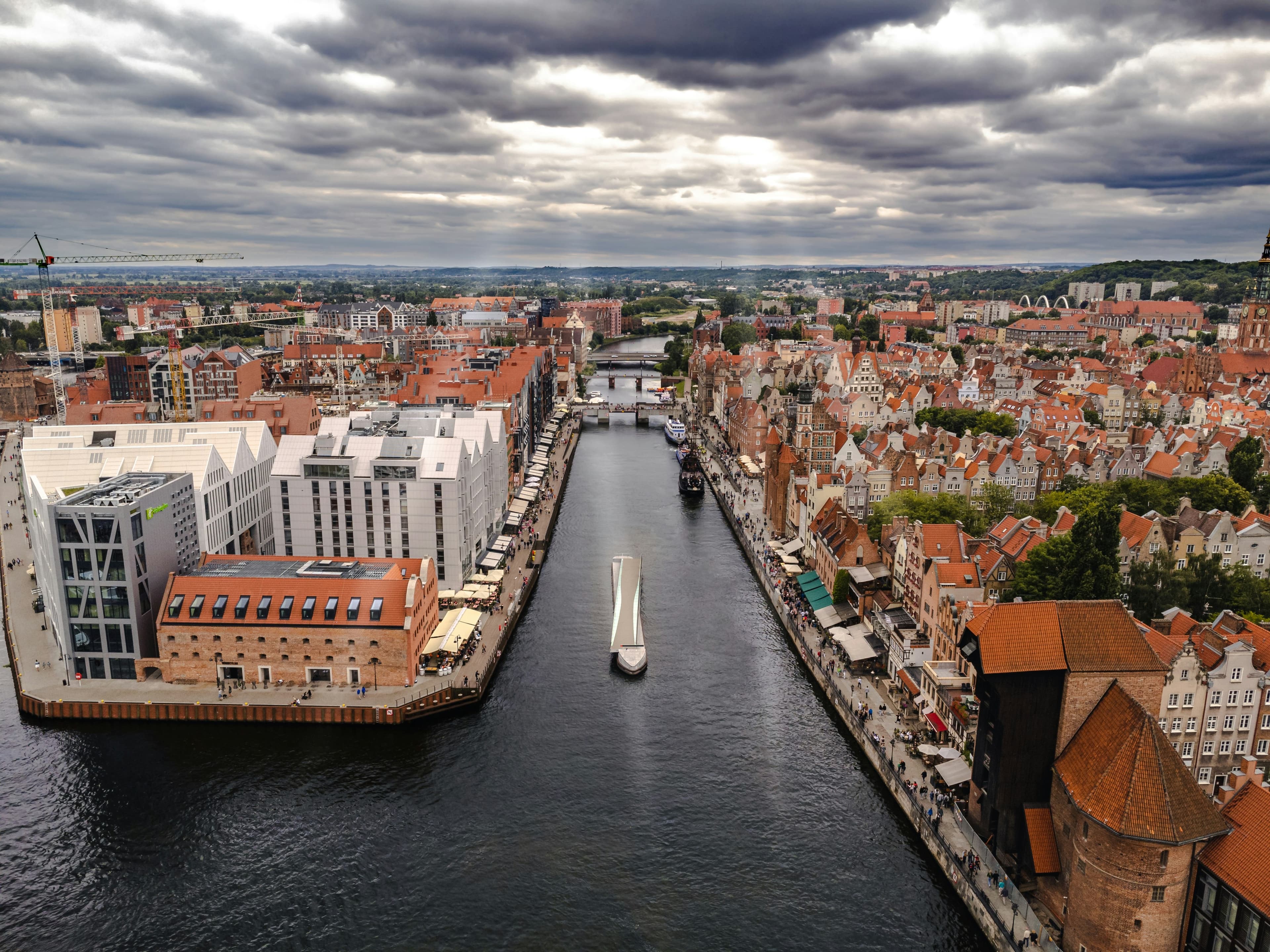
Gdańsk is where Baltic air salts red brick, where carved facades open to wide squares, and where the shipyards carry a chapter that changed Europe. In 2025, the tri-city stretch—Gdańsk, Sopot, Gdynia—moves easily on rails and feet. This guide gives you a practical way to see it: where to stay by neighborhood and mood, how to move without friction, essential sights and experiences, food and markets, a 2–4 day plan rooted in honest pacing, optional day trips, safety and etiquette, seasonality and money, and what to book and when. Begin with flexible dates and cheap flights to Gdańsk; midweek often reduces fares and crowds.
Where to stay
Main Town (Główne Miasto): facades, fountains, and short walks
Stay in the heart if it’s your first visit: Long Market, Neptune’s Fountain, Dluga Street. Mornings and nights feel like another city—quiet, reflected, generous with light. Ask for interior-facing rooms if you want silence; daytime crowds don’t last long. Cafés, bakeries, and museums are all minutes away.
Old Suburb and Granary Island: water edges and new builds
Across short bridges, new hotels and apartments line the Motława. Balconies face water; evenings carry a river hush. It’s an easy base for walkers who like space but want two-minute access to the Main Town.
Wrzeszcz and Oliwa: parks, palaces, steady rhythm
To the northwest, Wrzeszcz and Oliwa swap facades for leafy streets and city rhythm. Oliwa Park and its cathedral add calm; Wrzeszcz brings supermarkets, bakeries, and tram lines. If you’re day-tripping to Sopot or Gdynia, these areas make the rail simple.
Sopot (for the split stay): beach mornings
For a summer split stay, add Sopot to your plan. The beach, the pier, the evening promenade—all close and easy. Trains back to Gdańsk are frequent and short.
Getting around
Walk the Main Town; use trams and SKM commuter rails for longer jumps; add rides when late or tired. The airport rail link and buses are predictable. For a wider Pomerania loop, compare cheap car rentals in Gdańsk with pickup near the station or airport. If you’re staying central, you likely won’t need a car—rails and feet beat traffic.
- Airport: 30–40 minutes to the center by rail or bus.
- Tickets: Buy time-based passes in machines or via app; carry a backup paper ticket for peace of mind.
- SKM: Trains stitch Gdańsk–Sopot–Gdynia reliably; platforms are well signposted.
- Flights: Keep a month view open and start with cheap flights to Gdańsk. If disrupted, document costs and check compensation for delayed flights.
Essential sights and experiences
Long Market, Neptune’s Fountain, and Dluga Street
Come early for stone underfoot and facades catching first light. Return at blue hour when windows glow like lanterns.
St. Mary’s Basilica
One of the world’s largest brick churches; a climb rewards with a wide view over turned roofs and the river. Step softly; the space asks for it.
European Solidarity Centre
A museum of recent memory—industrial, human, precise. The building itself is the first exhibit. Book tickets for European Solidarity Centre on rainy days or when schedules are tight.
Motława river loop and crane (Żuraw)
Walk both banks for the full read—reflections, ship silhouettes, and the old crane. If you carry a notebook, this is where it opens by itself.
Oliwa Park and cathedral
Green, slow, and measured. The cathedral’s organ gives you a sense of the city’s scale in sound.
Sopot pier (Molo)
Simple pleasures: sea breeze, boards underfoot, light on water. Trains make it an easy half-day, especially in summer.
Food and markets
Gdańsk eats with the coast: fish, rye bread, soups, pierogi, smoked and pickled odds and ends, berries. The best strategy is light and often: a small breakfast, midday market grazing, a clean lunch, late coffee, and an unhurried dinner.
- Markets: Halls and seasonal stalls frame your day—fresh bread, local cheese, fruit, and smoked fish.
- Seafood: When it is good, it is very good. Aim early in the week or when boats have been moving.
- Contemporary Polish: Small rooms, careful plates, reservations advised for weekends.
- Reservations: For tiny spaces and peak summer, reserve with a backup. For stays, choose refundable hotels in walking range.
A realistic 2–4 day plan
Day 1: Main Town and river
- Morning: Long Market, Neptune’s Fountain, Dluga Street; short museum or coffee.
- Midday: Market grazing; riverside bench.
- Afternoon: St. Mary’s Basilica; climb for the view.
- Evening: Motława walk; dinner in a small room; blue hour facades.
Day 2: Memory and green
- Morning: European Solidarity Centre—tickets for European Solidarity Centre.
- Midday: Tram to Oliwa; park and cathedral; light lunch nearby.
- Afternoon: Canal and park loops; coffee.
- Evening: Return to the river or a concert if the calendar aligns.
Day 3: Coast
- Morning: SKM to Sopot; pier and beach walk.
- Midday: Lunch by the water; trains continue to Gdynia for maritime angles.
- Afternoon: Back to Gdańsk for a museum you missed or bookshops and coffee.
- Evening: Dinner and a final canal stroll.
Day 4 (optional): day trips
- Malbork Castle: Brick on a royal scale; trains are frequent; go early and unhurried.
- Kashubia: Lakes and forests; best with a car—compare cheap car rentals in Gdańsk and keep to daylight.
- Hel Peninsula: Simple seaside day; trains handle it in season.
Safety, etiquette, money, seasonality
- Safety: Gdańsk feels safe; normal city sense applies. After rain, cobbles and boards are slick—step with care.
- Etiquette: Churches and memorial spaces ask for low voices and attention. On trams, let people off first.
- Money: Cards are widely accepted; carry a little cash for markets and small cafés. Tipping is modest and appreciative.
- Seasonality:
- Spring: Clear light and cool air; book earlier for holidays.
- Summer: Seaside crowds; reserve stays and restaurants earlier; plan mornings and late afternoons outdoors.
- Autumn: Calm, golden, generous; markets shine.
- Winter: Short days; add museums and warm stops; shoes with grip are your friend.
- Disruptions: If flights are delayed or canceled, record everything and check eligibility for compensation for delayed flights. Build buffers for self-connections.
Booking and timing for 2025+
Scan month-long calendars for fare dips—begin with cheap flights to Gdańsk. Book refundable hotels with free cancellation near Main Town or Granary Island for maximum flexibility. For the European Solidarity Centre and peak-season exhibits, secure tickets for European Solidarity Centre when forecasts point to rain. For the coast and Malbork, buy rail tickets on the day unless it’s a holiday. For wider countryside, consider cheap car rentals in Gdańsk and keep drives to daylight hours.
The bottom line
Gdańsk is a city of stories made walkable: brick and water, shipyards and squares, markets and quiet benches by a canal. If you pace your days with this guide’s structure—clear mornings, market middays, green afternoons, and river evenings—you’ll carry home a memory that feels like time well spent. 2025 is a fine year to go: easy rails, steady air connections, and a city scaled to your steps.