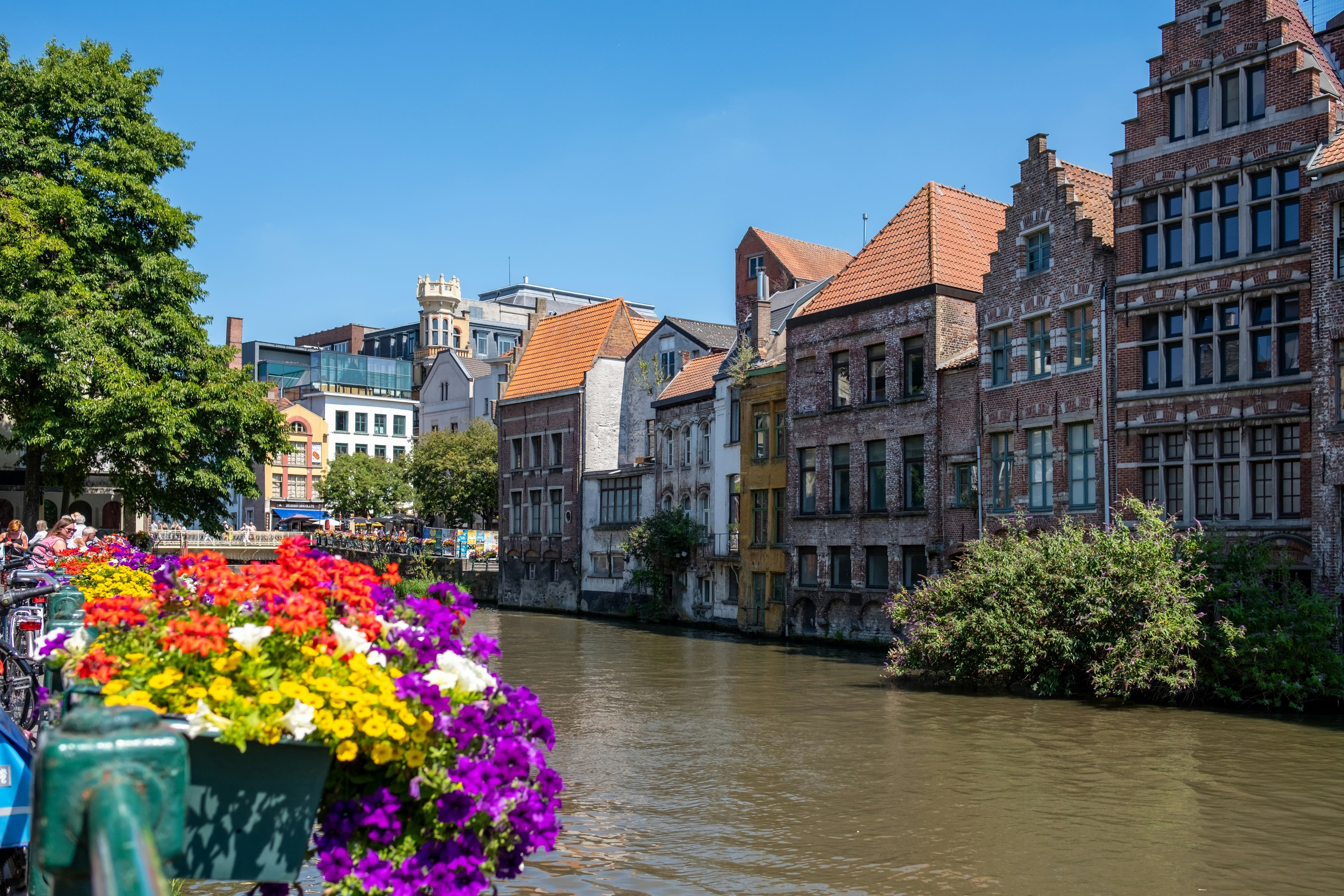
Carved by canals and crowned by belfries, Ghent balances student energy with medieval stone. In 2025, the city turns its compact center into an easy, walkable stage: bridges for views, squares for people‑watching, and market halls for flavor. It is less showy than Bruges, more intimate than Brussels, and endlessly photogenic without needing a checklist. This long‑form guide gives you everything you need for an unrushed two to four days: where to stay by mood and budget, how to move smoothly, essential sights that matter, real food markets and local snacks, a step‑by‑step plan for 2–4 days, smart day trips, practical safety and etiquette, seasonality, and booking advice for 2025+—plus clear pointers to skip‑the‑line tickets and museums, flexible hotels in Ghent, cheap car rentals in Ghent, cheap flights to Ghent, and the rules around compensation for delayed flights.
Where to stay
Best areas and how they feel
- Historic Center (Graslei/Korenlei, Korenmarkt): Honey‑colored quayside houses, stone bridges, and the cathedral–belfry–St. Nicholas triad within a five‑minute stroll. Perfect for first‑timers and scenery lovers. Expect crowds at midday; mornings and evenings are serene.
- Patershol: Medieval lanes, low doorways, and romantic restaurants. Quieter at night. Excellent for couples; limited modern hotel stock, more guesthouses and small inns.
- Arts District (Citadelpark, S.M.A.K./MSK area): Museum‑rich, green, and residential. Good if you like calmer nights and daytime art; tram connections are straightforward.
- Station area (Sint‑Pieters): Practical and budget‑friendly with quick trams to the center. Choose for early trains or late returns, or if you prize large modern rooms over old‑town charm.
- Portus Ganda: The sailors’ quarter reborn—canalside walks, community vibe, and cafés. A sweet compromise between quiet and closeness to the core.
- Dok Noord: Industrial‑chic regeneration north of the center: food halls, creative offices, and modern apartments. Great for longer stays and remote work.
- Student belt: Around the university. Vibrant and affordable, especially outside exam periods. Expect bar buzz at night.
- Booking pointers: For 2025 spring–summer weekends, secure rooms three to eight weeks ahead in the old town and Patershol. If you value quiet, request interior courtyards or upper floors; if you want views, ask for river‑ or square‑facing rooms and accept some ambient sound. In historic buildings, confirm elevator access if mobility matters.
Where to book and how to filter
Set flexible filters on flexible hotels in Ghent and compare neighborhoods on a map layer. Shortlist three properties in different areas to match your evolving plan: one by the Graslei for views, one in Patershol for dinners, one near the station for departure day. Look for free cancellation and strong recent reviews mentioning quiet rooms, water pressure, and breakfast quality.
Getting around
Walkable spine and trams
Ghent’s medieval heart is a car‑light zone where walking is the default. Trams radiate out from Korenmarkt and Sint‑Pieters toward museums and residential belts. Buy tickets via machines or the De Lijn app; validate before boarding where required. Most visitors combine walking with one or two tram hops a day.
Bikes and boats
Cycle lanes weave along canals, bridges, and parks. Rent a city bike if you want to cover MSK, S.M.A.K., and out‑of‑center breweries in one loop; otherwise you’ll rarely need wheels. The classic boat tour is a gentle hour through medieval silhouettes—nice early or late for calmer water and softer light.
Arriving by train and air
Ghent‑Sint‑Pieters station connects frequently to Brussels and Bruges. From Brussels Airport (BRU) you can ride a train with one change to Ghent in roughly 60–75 minutes. If you’re still comparing fares, open a flexible calendar and start with cheap flights to Ghent. Midweek often wins.
Essential sights and experiences
St. Bavo’s Cathedral and the Ghent Altarpiece
A rare combination: a living cathedral and a late‑medieval masterpiece in one stop. The Adoration of the Mystic Lamb sits in a carefully staged chapel with a modern audio guide. Book timed slots in high season via skip‑the‑line tickets and museums and plan 60–90 minutes for the full experience, including a lap around the nave and chapels.
Gravensteen (Castle of the Counts)
Stone walls, river views, and a surprisingly witty audio guide. The rooftop walk rings the skyline with belfry and spire silhouettes. Mornings are fresh and quiet; afternoons glow under the low sun. Families: the route is stair‑heavy—consider a carrier rather than a stroller.
Belfry of Ghent and St. Nicholas’ Church
The belfry tower is the city’s exclamation mark. Climb or take the lift to the top for a panorama of canal‑threads and brick roofs. Pair it with a slow wander inside St. Nicholas’ Church, whose layered stone and filtered light calm your pace.
Graslei and Korenlei
Ghent’s postcard pair. Come at sunrise for dew and still water; return at blue hour for reflections and bridge silhouettes. Bring a warm layer—canal breezes linger even in June. Benches fill fast at sunset; arrive early if you want a front‑row seat.
Design and contemporary art: MSK and S.M.A.K.
Museum voor Schone Kunsten (MSK) shows centuries of Flemish art; S.M.A.K. brings the contemporary and the provocative. They sit across from each other by Citadelpark—ideal for a full morning with a picnic between them. Tram back to the center after a coffee among trees.
Hidden courtyards and beguinages
Ghent’s beguinages are quiet worlds within the city—a UNESCO‑listed fabric of white walls, lawns, and chapels. Step softly, speak gently, and observe residential signs. This is living heritage, not a theme park.
Food and markets
Market mornings
Start at Vrijdagmarkt or the Great Butchers’ Hall on weekends for cheese, cured meats, bread, and fruit. The covered halls keep a steady rhythm through drizzle; stalls change with the seasons. Build a picnic for Graslei or a canal bench: goat cheese, Ardennes ham, crusty loaf, cherries or pears in season, and a square of dark chocolate.
Local classics (with a modern twist)
- Gentse Waterzooi: A creamy stew of chicken or fish with root vegetables—warming and gentle. Look for versions with quality stock and bright herbs.
- Stoverij (carbonade flamande): Beef braised in beer with onions and mustard, served with fries. Good with a malty ale.
- Tierenteyn‑Verlent mustard: Buy a small jar for sandwiches and snacks—pungent, local, perfect for picnics.
- Chocolates and pralines: Try a single origin piece with coffee; bring a few as gifts.
- Waffles: Crisp edges, soft centers; keep toppings simple to taste the batter.
- Beer: Belgian beer menus can overwhelm; ask for two contrasting styles and split with a friend.
Restaurant reservations help on Friday and Saturday nights. For tasting‑style dinners, book a week out. For casual plates, arrive early or join the second seating. If your trip gets disrupted, remember your rights and potential compensation for delayed flights—keep receipts and boarding passes.
Suggested 2–4 day plan
Day 1: First impressions on stone and water
Arrive by train at Sint‑Pieters and tram into the center, or drop bags if your hotel is nearby. Start with a slow loop over St. Michael’s Bridge, down the Graslei, across Korenlei, and into Korenmarkt. Visit St. Nicholas’ Church to settle your pace. Lunch can be a market plate or a bowl of waterzooi. In the afternoon, climb the belfry for the lay of the land. At blue hour, return to the bridge for photos, then dinner in Patershol—ask for a table outside if the evening is soft.
Day 2: Art, altarpiece, and a castle
Morning at St. Bavo’s with the Ghent Altarpiece; book timed entry in high season via skip‑the‑line tickets and museums. Coffee near the cathedral, then walk to Gravensteen for the castle circuit and rooftop views. Lunch is simple: bread, cheese, mustard, fruit, and a chocolate square on a bench by the canal. Spend the late afternoon at MSK and S.M.A.K.—choose one if you prefer depth. Dinner in the center; sample a local beer flight as a shared tasting.
Day 3: Markets, courtyards, and slow corners
Begin at Vrijdagmarkt and the Great Butchers’ Hall; assemble a picnic. Explore a beguinage and nearby courtyards with respectful quiet. Drift through side streets to find small galleries and secondhand bookstores. If you’re staying four days, reserve this afternoon for a boat tour, a cycling loop, or simply reading by the canal with a pastry. Dinner can be contemporary Flemish or a shared plate tavern—book weekend evenings.
Day 4 (optional): Architecture or beer
Architects will enjoy a self‑guided route of brickwork, stepped gables, and post‑industrial conversions around Dok Noord. Beer fans can book a tasting and brewery visit on the city’s edge—tram out and walk back at golden hour. If you favor photography, chase reflections and soft stone under changing light; bridges become studios near sunset.
Optional day trips
- Bruges: 25–30 minutes by train. Smaller, famously preserved, and crowded mid‑day. Go early or late; enjoy canals and quiet squares beyond the main triangle.
- Antwerp: 55–60 minutes by train. Fashion, diamonds, and a glorious train station. Pair Rubens with a riverside walk.
- Brussels: 35–40 minutes by train. Grand Place, comic murals, and museums galore. A full day if you love art; half‑day for a highlight loop.
- Leuven: 60 minutes by train. University town with lace‑like city hall and buzzing cafés. Good for an easy half‑day.
All are simple by rail; a car is unnecessary for this set. If you want to string countryside stops or chase abbey breweries, rent for 24 hours with cheap car rentals in Ghent and aim for midweek to avoid traffic.
Safety, etiquette, money, seasonality
Safety
Ghent is broadly safe. In crowded squares and trams, keep wallets and phones front‑of‑mind. At night choose lit routes along the water. Stone and metal surfaces can be slick after rain—wear shoes with tread. Tap water is potable; fountains and cafés will refill bottles.
Etiquette
- Say hello in a friendly tone; English is widely understood, Dutch is appreciated.
- Queue politely at trams and counters; keep voices moderate indoors.
- Respect residential signs in beguinages; keep cameras discreet.
- Bike lanes are not sidewalks—look both ways before stepping across.
- Keep canals and quays clean; pack out picnics.
- Churches are living places of worship; dress casually but respectfully.
- Late‑night noise echoes in narrow streets; favor indoor bars after 23:00.
- Tip by rounding up or leaving small change for good service.
- For disruptions, know your rights and potential compensation for delayed flights under EU261.
- When booking attractions, consider skip‑the‑line tickets and museums for timed entries.
Money
Euro (€). Cards are accepted almost everywhere; small cash helps at markets and tiny bakeries. Expect €12–€20 for lunch menus, €20–€45 for dinner in mid‑range restaurants, and modest museum fees with combined tickets or discounts for students and families.
Seasonality
- March–May: Best balance of light, blooms, and manageable crowds. Pack layers—mornings are crisp.
- June–August: Warm, long days; canals shimmer, evenings stretch. Reserve terraces and hotels early. Bring sunscreen and a light jacket for breezes.
- September–October: Golden light, harvest flavors, and calmer streets after summer.
- November–February: Quiet, misty mornings, and cozy cafés. Fewer lines, lower prices, and a romantic gloom for photographers.
Booking and timing for 2025+
Lock in lodgings early for spring weekends and any city festivals; use free‑cancellation filters on flexible hotels in Ghent. For popular interiors like the Ghent Altarpiece and Gravensteen, book timed entry through skip‑the‑line tickets and museums. If you plan a multi‑city loop, compare cheap flights to Ghent into Brussels versus trains from nearby hubs; midweek often reduces fares. If things go sideways, document delays and expenses to check eligibility for compensation for delayed flights. For extra flexibility in the region or countryside add‑ons, compare cheap car rentals in Ghent for 24‑hour windows and pick up near Sint‑Pieters to avoid old‑town driving.
Concise bottom line
Ghent is the soft‑spoken heart of Flanders: canals for quiet, bridges for views, stone for time travel, and markets for flavor. In 2025, it’s an easy, joyful city for two to four days. Sleep where your rhythm fits—old town for views, Patershol for romance, station area for convenience. Walk first, tram when needed, and spend your days between a masterpiece altarpiece, a lived‑in castle, and quayside benches. Eat with curiosity and buy a jar of mustard to take home. Book the big things, leave room for wandering, and let the water pace you. Begin with cheap flights to Ghent, choose flexible hotels in Ghent with free cancellation, pick a couple of skip‑the‑line tickets and museums, save cheap car rentals in Ghent for countryside strings, and keep compensation for delayed flights in the back pocket you hope never to use.